
2023 nfhs football rule book pdf
2023 NFHS Football Rule Book PDF: A Comprehensive Plan
The NFHS released its inaugural flag football rulebook in 2025, guiding the sport’s rapid expansion across sixteen states, alongside updates from the NHSF.
The National Federation of State High School Associations (NFHS) continually refines football regulations to prioritize player safety and maintain competitive integrity. This comprehensive rule book serves as the definitive guide for high school football officials, coaches, and players nationwide. Notably, the surge in flag football’s popularity prompted the NFHS to publish its first dedicated rulebook in 2025, addressing the unique aspects of this emerging sport.
This document reflects ongoing collaboration within heritage science, connecting communities of practice and fostering knowledge sharing, as exemplified by the National Heritage Science Forum (NHSF).
Availability and Accessing the PDF
The 2025-2026 NFHS Flag Football rulebook, alongside other NFHS publications, is available for purchase directly from the NFHS website. Accessing these resources ensures coaches and officials have the most current guidelines. The NHSF also contributes to knowledge dissemination through its newsletter, providing updates on heritage science data services like HSDS and the Strategic Framework.
User login is required to access certain resources, with a password recovery option available on the ExpressionEngine platform.
Key Changes in the 2023 Rule Book
The most significant change is the release of the first-ever NFHS Flag Football rulebook in 2025, addressing the sport’s burgeoning popularity. This publication establishes standardized guidelines for the sixteen states currently sanctioning flag football. The NHSF promotes collaboration in heritage science, mirroring the NFHS’s role in standardizing rules.
Updates are shared via the NHSF newsletter, focusing on data services and strategic frameworks, enhancing knowledge sharing across organizational boundaries.
I. Player Safety Regulations
While the provided text primarily focuses on flag football rule standardization (2025), player safety remains paramount in all NFHS sports. Though specific 2023 updates aren’t detailed here, regulations typically cover helmet standards, equipment checks, and stringent concussion protocols.
Reporting procedures are crucial, alongside rules addressing illegal contact and targeting. The NHSF’s collaborative spirit extends to ensuring safe practices within heritage science research, paralleling the NFHS’s commitment to athlete well-being.
A. Helmet and Equipment Standards
The provided information doesn’t detail 2023 helmet standards, but NFHS regulations generally mandate equipment meeting specific safety certifications. This includes helmets rigorously tested for impact absorption and face masks providing adequate protection. Regular equipment checks by coaching staff are essential.
Similar attention to detail in preserving heritage artifacts, as seen within the NHSF’s data service (HSDS), highlights the importance of maintaining standards for safeguarding valuable items – mirroring athlete protection.
B. Concussion Protocols and Reporting
The provided text doesn’t specify 2023 concussion protocols, but NFHS rules prioritize player safety with stringent guidelines. These typically involve immediate removal from play for athletes exhibiting concussion symptoms, followed by medical evaluation.
Clear reporting procedures are crucial, mirroring the detailed data management within heritage science initiatives like the HSDS. Collaboration, emphasized by the NHSF, ensures consistent application of safety measures, protecting athletes’ long-term health.
C. Illegal Contact and Targeting Rules
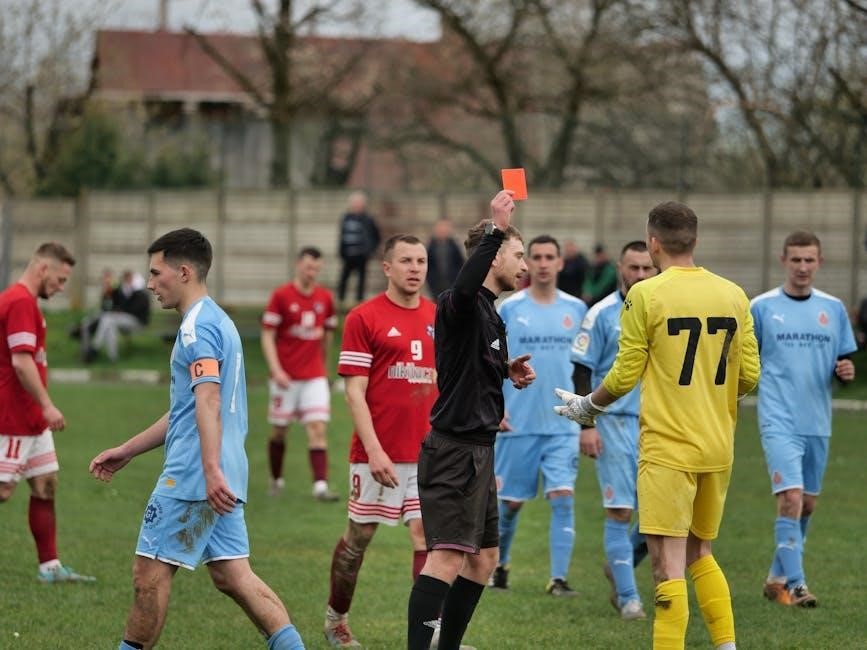
The provided information doesn’t detail 2023 specifics, but NFHS rules consistently aim to minimize dangerous contact. Illegal contact rules define prohibited actions, while targeting rules address forceful hits to the head or neck area.
These rules, like data cube production for pigment identification in heritage science, require precise definition and consistent application. Strict enforcement, mirroring the NHSF’s collaborative spirit, is vital for player safety and fair play, preventing severe injuries.
II. Game Administration and Officiating
The 2023 NFHS Football Rule Book, and the newer flag football guidelines, necessitate clear administrative procedures and consistent officiating. This includes proper game management, accurate timekeeping, and adherence to established protocols.
Like the NHSF’s work in knowledge sharing, effective communication between officials is crucial. Consistent application of rules, similar to HSI-XRF data analysis, ensures fairness. The rulebook provides detailed guidance for officials, promoting standardized mechanics and responsible game control.
A. Game Length and Timing Rules
The NFHS rulebook meticulously defines game length and timing regulations, ensuring consistency across all levels of play. These rules cover quarter durations, halftime intervals, and procedures for stopping and starting the clock.
Similar to the structured approach of the Heritage Science Data Service (HSDS), precise timing is paramount. Rules address situations like incomplete passes, out-of-bounds plays, and penalties, dictating how the game clock is managed. Adherence to these guidelines is vital for fair competition and efficient game administration.
B. Referee Signals and Mechanics
The NFHS rulebook provides a detailed guide to referee signals and proper officiating mechanics, crucial for clear communication and consistent rule enforcement. This section outlines standardized hand signals for penalties, scoring plays, and other game situations.
Just as collaboration is key within the National Heritage Science Forum (NHSF), precise signaling ensures all officials and players understand decisions. Mechanics cover positioning, movement, and teamwork among the officiating crew, mirroring the strategic partnerships needed for heritage science data management.
C. Responsibilities of the Game Officials
The NFHS rulebook clearly defines the responsibilities of each game official, from the referee’s overall authority to the specific duties of umpires and linesmen. This includes pre-game checks of equipment, ensuring player safety, and consistent application of rules throughout the contest.
Similar to the NHSF’s work in connecting heritage science communities, officials must collaborate effectively. Responsibilities extend to accurate timekeeping, managing the game clock, and handling administrative tasks, mirroring data management within heritage science projects.
III. Playing Rules ‒ Offense
The NFHS rulebook meticulously details offensive regulations, covering forward pass mechanics, eligible receiver rules, and blocking schemes. It clarifies down management, scoring procedures, and penalties related to offensive infractions. These rules aim to balance offensive freedom with player safety, mirroring the careful consideration in heritage science data handling.

Recent updates, like the flag football rulebook release, emphasize clear guidelines. Officials must enforce these rules consistently, ensuring fair play and a dynamic offensive game, much like collaborative efforts within the NHSF.
A. Forward Pass Regulations
The NFHS rulebook precisely defines legal forward pass parameters, including eligibility at the line of scrimmage and beyond. It specifies restrictions on pass interference, intentional grounding, and illegal forward passes. These regulations aim to promote a balanced passing game while prioritizing player safety, echoing the precision needed in HSI-XRF data cube production.

Updates, mirroring the new flag football rules, ensure clarity for officials and players. Consistent enforcement is crucial for fair play, similar to knowledge sharing within the NHSF community.
B. Blocking Rules and Restrictions
The NFHS rulebook details legal blocking techniques, emphasizing player safety and prohibiting dangerous or illegal blocks. Restrictions cover blocks below the waist, from behind, and those initiating contact with a defenseless player. These rules aim to minimize injuries, aligning with the broader focus on heritage science data preservation.
Clarifications, similar to those in the new flag football guidelines, ensure consistent interpretation by officials, fostering fair competition and mirroring collaborative efforts within the NHSF.
C. Scoring and Downs Management
The 2023 NFHS Football Rule Book meticulously outlines scoring values – touchdowns, field goals, and extra points – alongside procedures for downs management. It clarifies rules regarding first downs, possession, and game clock operation, ensuring consistent application across all contests. These details are crucial for fair play, much like data management within heritage science.
Similar precision is found in the new flag football rules, reflecting the NFHS’s commitment to clarity and mirroring the NHSF’s focus on knowledge sharing.
IV. Playing Rules ౼ Defense
The NFHS Football Rule Book’s defensive regulations prioritize player safety, detailing restrictions on defensive formations and outlining permissible tackling techniques. It clarifies illegal defense rules, including those concerning pass interference and illegal contact, ensuring fair play. These rules aim to minimize risk, echoing the careful data handling within heritage science initiatives like HSDS.
The emergence of flag football necessitates distinct defensive strategies, as highlighted by the NFHS’s new rulebook, promoting collaboration like the NHSF.
A. Defensive Formation Restrictions
The 2023 NFHS Football Rule Book meticulously details permissible defensive formations, limiting the number of players on the line of scrimmage and dictating spacing requirements. These restrictions aim to prevent defensive overloading and ensure offensive players have adequate protection. Similar to the structured data management of the Heritage Science Data Service (HSDS), these rules promote order and fairness.
Flag football’s defensive formations, as outlined in the new NFHS rulebook, differ significantly, mirroring the NHSF’s collaborative approach.
B. Tackling and Illegal Defense Rules
The 2023 NFHS Football Rule Book rigorously defines legal tackling techniques, prioritizing player safety and minimizing the risk of injury. Illegal contact, including targeting and hitting defenseless players, is strictly prohibited, mirroring the careful data handling within heritage science initiatives. These rules, like the Strategic Framework for Heritage Science, emphasize protection.
Flag football’s rules, detailed in the new NFHS publication, focus on flag guarding and non-contact techniques, a departure from traditional tackling, aligning with NHSF’s collaborative spirit.

C. Pass Interference Regulations
The 2023 NFHS Football Rule Book provides detailed guidelines on pass interference, clarifying legal and illegal contact during passing plays. These regulations aim to balance offensive freedom with defensive opportunities, much like the NHSF balances data access with preservation. Consistent application by officials is crucial, mirroring the need for standardized data formats.
The emerging flag football rules, now formalized by the NFHS, adapt these concepts to a non-contact environment, emphasizing flag guarding and legal positioning, fostering collaboration.
V. Special Teams Rules
The NFHS Football Rule Book meticulously details special teams procedures, covering kickoffs, punts, field goals, and extra points. These rules prioritize player safety, aligning with broader NFHS initiatives and the spirit of heritage science data preservation. Updates reflect evolving strategies and risk mitigation, similar to the NHSF’s strategic framework.
The recent flag football rulebook release also addresses these plays, adapting them for a non-contact format, mirroring the collaborative spirit of the NHSF’s work.
A. Kickoff and Punt Return Rules
NFHS rules governing kickoffs and punt returns emphasize player safety and minimize high-speed collisions. Regulations dictate positioning, running lanes, and blocking restrictions for both the kicking and receiving teams. These rules are continually refined, reflecting research and best practices, much like the data management within heritage science.
The new flag football rules adapt these concepts, prioritizing flag guarding and non-contact returns, echoing the NHSF’s collaborative approach to knowledge sharing.
B; Field Goal and Extra Point Procedures
The NFHS rule book meticulously details procedures for field goals and extra points, covering snap, hold, and kick mechanics. It specifies the placement of the ball, the alignment of players, and the responsibilities of the kicking team’s protection unit. These rules aim for fairness and consistent application, mirroring the precision needed in HSI-XRF data cube production.

Similar attention to detail is evident in the emerging flag football rules, adapting these procedures for a non-contact environment, aligning with the NHSF’s strategic framework.
C. Onside Kick Regulations
The NFHS rule book outlines specific regulations governing onside kicks, focusing on the distance the ball must travel and the requirements for legal recovery. These rules aim to balance the kicking team’s opportunity to regain possession with the receiving team’s chance to secure the ball. This mirrors the collaborative spirit of the National Heritage Science Forum.
Updates from the HSDS and RICHeS influence these considerations, ensuring fair play alongside knowledge sharing, much like ExpressionEngine platform updates.
VI. Flag Football Specific Rules (Emerging Sport)
Recognizing flag football’s surge in popularity, the NFHS published its first dedicated rulebook in 2025, providing standardized guidelines for the rapidly growing sport. These rules differ significantly from traditional football, emphasizing speed, agility, and non-contact play.
The rulebook details flag guarding regulations and contact limitations, aligning with the NHSF’s focus on collaboration and strategic frameworks. This mirrors data management practices within the Heritage Science Data Service (HSDS).
A. Differences from Traditional Football Rules
The 2025 NFHS flag football rulebook establishes key distinctions from traditional football, prioritizing player safety and a faster pace of play. Notably, tackling is prohibited, replaced by flag removal to end plays. Blocking techniques are also modified to minimize contact, reflecting the sport’s non-contact nature.
Scoring and possession rules are adapted for flag football’s unique dynamics, aligning with the NHSF’s collaborative approach to sport development and data sharing initiatives like HSDS.
B. Flag Guarding and Contact Rules
The NFHS flag football rulebook meticulously details regulations surrounding flag guarding, prohibiting actions that shield flags from being pulled. Contact rules emphasize incidental contact only, strictly forbidding intentional or avoidable collisions. These guidelines prioritize player safety, mirroring the broader focus within heritage science on preserving valuable assets.
Penalties are clearly defined for violations, ensuring fair play and consistent officiating, aligning with the NHSF’s commitment to knowledge sharing and strategic partnerships.
C. Scoring and Possession in Flag Football
The 2025-26 NFHS Flag Football Rule Book outlines specific scoring values: touchdowns, extra points, and field goals. Possession is determined by standard football principles, with downs and change of possession rules clearly articulated. These regulations, like data management in heritage science, ensure a structured and understandable framework.
The rulebook emphasizes continuous play and efficient game flow, mirroring the NHSF’s focus on collaboration and knowledge dissemination within the heritage sector.
VII; Rule Book Updates and Clarifications (2025-2026)
The NFHS released the first flag football rules publication for the 2025-2026 season, addressing the sport’s burgeoning popularity. Updates include clarifications on rules, mirroring the NHSF’s newsletter updates regarding the Heritage Science Data Service (HSDS) and the Strategic Framework.
These revisions aim for consistent officiating and player safety, much like the collaborative efforts within heritage science to preserve and share knowledge across organizational boundaries.
VIII. Resources for Officials and Coaches
Access to the NFHS flag football rulebook is crucial for officials and coaches, ensuring consistent application of rules during the sport’s growth. The National Heritage Science Forum (NHSF) similarly fosters collaboration through strategic partnerships, building knowledge and skills.
Resources include training materials and interpretations, mirroring the NHSF’s commitment to data management and knowledge sharing within the heritage science community, accessible via their website.
IX. National Heritage Science Forum Relevance (Indirect)

While seemingly disparate, the NFHS rulebook’s development parallels the NHSF’s focus on standardized guidelines. Both organizations emphasize clear documentation and consistent application of principles – the NFHS for fair play, and the NHSF for heritage science research.
The NHSF’s collaborative spirit, fostering partnerships and knowledge sharing, echoes the need for unified rule interpretation within the expanding flag football landscape.
X. Heritage Science Data Service (HSDS) Connection (Indirect)
The HSDS, dedicated to data management and accessibility, finds an indirect link to the NFHS rulebook through the need for organized information. Just as heritage science relies on well-structured data, consistent rule application demands clear documentation and readily available resources for officials and coaches.
Effective dissemination of the rulebook, akin to HSDS’s data sharing, ensures equitable understanding and implementation across all participating schools and states.
XI. Strategic Framework for Heritage Science (Indirect)
The NFHS rulebook’s development mirrors the strategic framework utilized in heritage science – a planned approach to preserve and advance a field. Both require collaboration, knowledge sharing, and consistent updates to address evolving needs.
Just as heritage science builds upon existing knowledge, the NFHS rulebook builds upon previous iterations, incorporating feedback and adapting to the sport’s growth, particularly with flag football’s emergence.
XII. Updates from NHSF Newsletter (Indirect)
Similar to how the National Heritage Science Forum (NHSF) disseminates updates via its newsletter, the NFHS communicates rule changes and clarifications regarding the football rulebook. Both organizations prioritize timely information delivery to stakeholders.
The NHSF newsletter highlights contributions to strategic frameworks, mirroring the NFHS’s efforts to establish a clear guideline for the rapidly growing sport of flag football, ensuring consistent application of rules nationwide.
XIII. HSI-XRF Data Cube Production (Indirect)

Just as sophisticated techniques like HSI-XRF data cube production enhance pigment identification in heritage science, the NFHS rulebook provides a detailed framework for officiating football. Both involve meticulous data organization and analysis.
The creation of these “data cubes” parallels the NFHS’s comprehensive approach to rule clarification, ensuring consistent interpretation and application on the field, much like precise scientific analysis.
XIV. UCL and Heritage Science Forum (Indirect)
Similar to the collaborative spirit fostered by UCL and the Heritage Science Forum to connect communities of practice, the NFHS rulebook serves as a central point of reference.
It unites coaches, officials, and players under a shared understanding of the game’s regulations. This collaborative approach, mirroring heritage science partnerships, ensures consistent application and promotes fair play, building knowledge and skills across the football landscape.
XV. ExpressionEngine Platform (Indirect)
Just as the ExpressionEngine platform facilitates the organization and delivery of information, the NFHS Football Rule Book PDF provides a structured resource for all stakeholders.
This digital format ensures accessibility and ease of navigation, mirroring the platform’s user-friendly design. Like a well-maintained website, the rulebook is regularly updated and revised, ensuring its continued relevance and accuracy for coaches and officials nationwide.
XVI. Annual General Meeting Information (Indirect)
Similar to the National Heritage Science Forum’s Annual General Meetings fostering collaboration, the NFHS Football Rule Book serves as a central point of reference for consistent application of rules.
These meetings, like the rulebook’s updates, ensure all parties – officials, coaches, and state associations – are aligned. The rulebook’s distribution and interpretation parallels the dissemination of information discussed during these vital gatherings, promoting fairness and safety in the game.
XVII. Collaboration in Heritage Science (Indirect)
Just as the National Heritage Science Forum (NHSF) champions collaboration across organizations, the NFHS Football Rule Book’s development relies on input from diverse stakeholders.
State associations, coaches, and officials contribute to rule modifications, mirroring the NHSF’s network of heritage science professionals. This collaborative process ensures the rulebook reflects practical experience and evolving safety standards, fostering a unified approach to the game nationwide, much like shared knowledge in heritage science.
XVIII. Knowledge Sharing and Data Management (Indirect)
Similar to the Heritage Science Data Service (HSDS) facilitating data access, the NFHS Football Rule Book serves as a central repository of standardized rules.
This document disseminates crucial information to all involved – players, coaches, and officials – ensuring consistent application of regulations. The rulebook’s PDF format enables easy distribution and archiving, mirroring the HSDS’s role in preserving and sharing heritage science data for broader understanding and improved practices within the sport.
XIX. Organizational Boundaries and Partnerships (Indirect)

Reflecting the National Heritage Science Forum’s (NHSF) collaborative spirit, the NFHS rulebook development likely involves partnerships between state high school associations and football experts.
This collaborative approach transcends organizational boundaries, ensuring the rulebook reflects diverse perspectives and best practices. Just as the NHSF connects various institutions, the NFHS coordinates rules nationally, fostering consistency and fair play across different states and levels of competition, ultimately benefiting the sport’s growth.
XX. User Login and Password Recovery (Indirect)
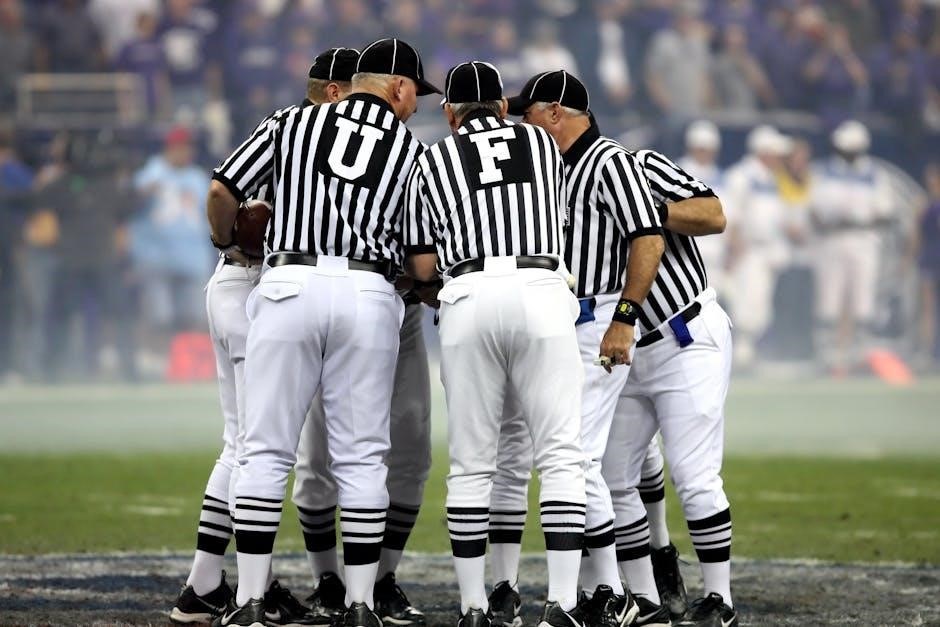
Similar to accessing resources on the National Heritage Science Forum’s (NHSF) ExpressionEngine platform, accessing the NFHS Football Rulebook PDF likely requires a user account or purchase.
This suggests a login system with password recovery options, ensuring authorized access to the official rules. The NHSF’s platform emphasizes secure access, mirroring the NFHS’s need to protect the integrity of its rulebook and control distribution, potentially through a membership or purchase-based system.
XXI. Rulebook Version History
Given the recent release of the first NFHS Flag Football rulebook in 2025, and ongoing updates communicated through the NHSF newsletter, a detailed version history for the NFHS Football Rulebook is crucial.
This history would document changes from previous editions, mirroring the NHSF’s commitment to knowledge sharing and data management. Tracking revisions ensures officials and coaches utilize the most current regulations, vital for consistent application and player safety, especially with a rapidly evolving sport like flag football.
XXII. Contact Information for Rule Inquiries
For questions regarding the NFHS Football and Flag Football rulebooks (including the 2025 Flag Football edition), direct inquiries to the NFHS headquarters.
The National Heritage Science Forum (NHSF) facilitates collaboration, but rule-specific questions should bypass them. Contact details, including phone numbers and email addresses, are available on the NFHS website. Prompt responses ensure clarity for officials, coaches, and stakeholders navigating the evolving rules landscape, fostering consistent and safe gameplay.
XXIII. Future Rule Changes and Considerations
The NFHS continuously evaluates rules based on player safety, game flow, and emerging trends, particularly within rapidly growing flag football.
Expect ongoing adjustments informed by data analysis and feedback from officials and coaches. The NHSF’s collaborative network aids in identifying areas for improvement. Future considerations may include refining flag guarding rules, enhancing concussion protocols, and adapting to technological advancements impacting the sport, ensuring a dynamic and responsive rule set.